Competitive Rewards with Less ETH
The Community Staking Module (CSM) is a Lido staking module with permissionless entry, allowing any operator to run validators with less ETH and improved capital efficiency compared to solo staking.

up to 4.81%*
CSM staking APR
1.5 - 2.4 ETH
Initial capital requirement
599
Permissionless operators registered
8.07%
Permissionless staking share
*All APR values and rewards referenced on this page are estimates based on current conditions and may vary. Nothing here guarantees future rewards. Penalties may apply. Do your own research before engaging.
Your Options to Join CSM
Default
Run validators permissionlessly with CSM
up to 3.58%* APR
1.3 - 2.4 ETH bond
Permissionless entrance
Performance tolerance

Identified Community Staker
Independent stakers deserve more: apply, get verified, and unlock enhanced parameters
up to 4.81%* APR
1.3 - 1.5 ETH bond
Broader performance tolerance
Limited stake allocation priority
CSM or Solo Staking? Why not both!
Run CSM validators on your existing solo staking setup with ease
CSM
Solo staking
APR
up to 4.81%*
2.03%*
Capital requirements
1.3 - 2.4 ETH
32 ETH minimum
Middleware-free

Yes
Yes
Low/no-code setup tools
Yes
Yes
Smoothing rewards
Yes
 No
No
Performance tolerance
Yes
No
CSM Reward Structure
Enter ETH amount you can provide as a bond
Required bond
2.4 ETH

Excess bond
0 ETH
Annual rewards
0.06 ETH
Bond rebase
1.83% (0.04 ETH)
Node Operator rewards
0.95% (0.02 ETH)
Capital multiplier
1.36x
Reward rates
2.78%* APR
Default
VS
2.03%* APR
Solo staking
Default
ICS
Solo staking
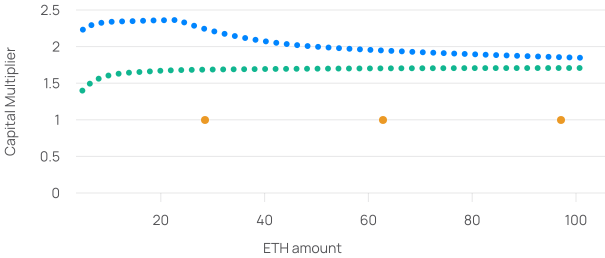
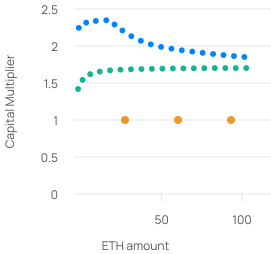
This chart shows how reward allocation may differ between staking setups, and does not represent guaranteed results. Actual outcomes and rewards vary based on factors such as network conditions and validator performance.
Simple Staking with CSM
Take advantage of the variety of solutions integrated with CSM to improve your validator node operations
Low/no-code Integrations
Run with DVTs
Validator as a Service (VaaS)
Performance Tracking
Low/no-code Integrations
Use Plug & Play solutions for a smoother validator node setup experience


Validator as a Service (VaaS)
Participate in the network via VaaS without needing to bootstrap or maintain a validator node


Pre-built Hardware for an Easier Start
A plug-and-play Dappnode machine is available for those who prefer starting with pre-assembled validator hardware. It comes with Dappnode Core installed and meets all requirements for running Ethereum validators at home, including with CSM.
Buy Dappnode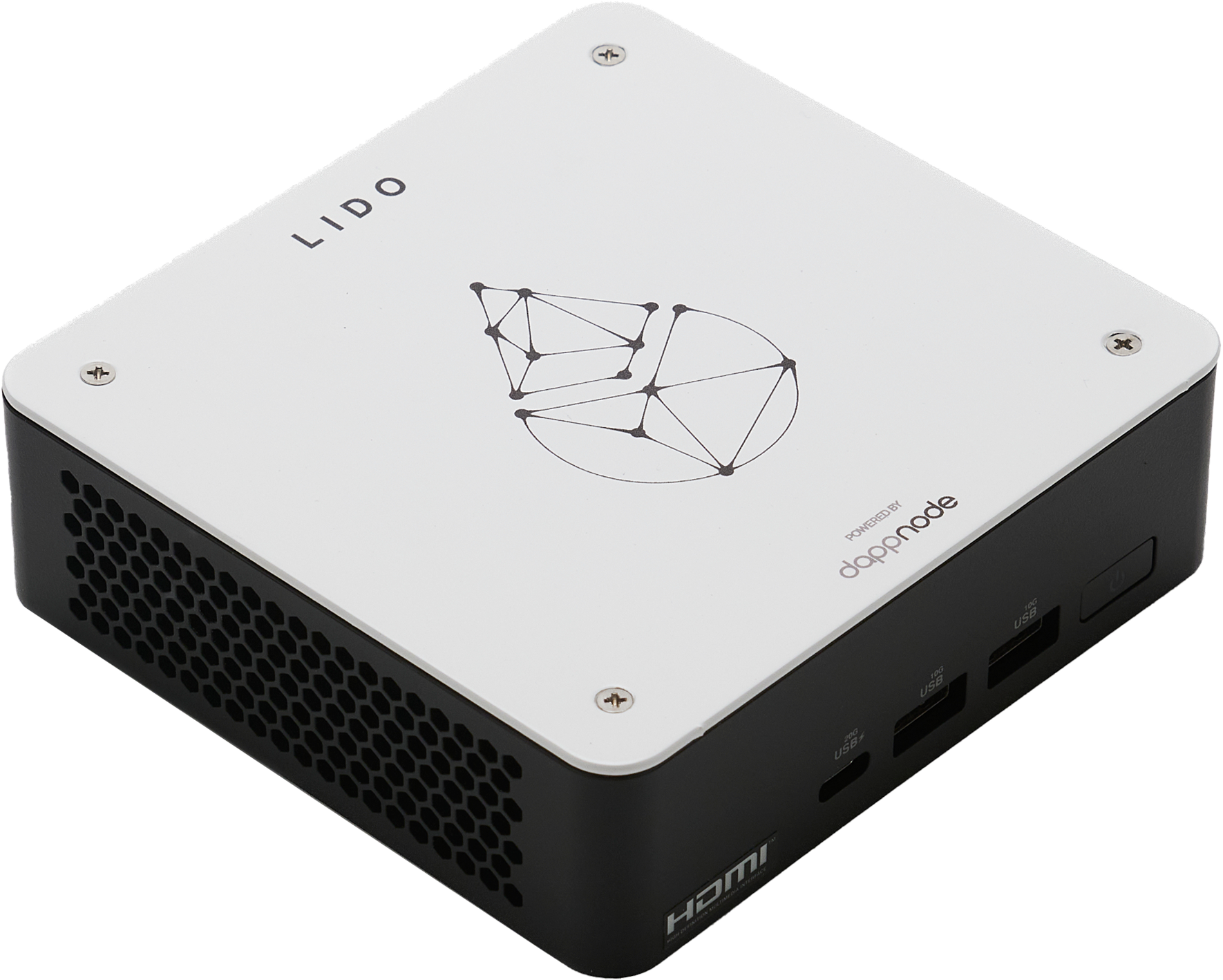
Embrace the Community Energy
![ETHCC 2025 - Lido Stakers Guild [Cannes]](/static/csm/events/ethcc-2025.svg)
ETHCC 2025 - Lido Stakers Guild [Cannes]
From local meetups to global events, community members are gathering in cities around the world to connect, collaborate, and inspire one another through shared experiences and stories.
Get event updatesFAQ
The Ethereum network is secured through the Proof-of-Stake based consensus mechanism. It involves locking a minimum of 32 ETH per validator in the deposit contract to enable validator participation in the Ethereum consensus. Validators attest to and propose blocks, and as a consequence, they may receive rewards from consensus incentives and Execution Layer priority fees/MEV. Downtime can incur penalties, and serious faults or malicious behavior can result in slashing - the forced exit of a validator and a corresponding loss of staked ETH.
* APR/APY figures are estimates, not guaranteed, and are subject to change based on network conditions.
Rewards may fluctuate and are influenced by factors outside the platform’s control, including changes to blockchain protocols and validator performance. Past performance does not guarantee future results. Rewards are not assured and depend on the specific rules and mechanisms established by each underlying blockchain network. Users should conduct their own research, seek professional advice, and ensure they understand the risks before participating.
Your privacy matters. We use cookieless analytics and collect only anonymized data for improvements. Cookies are used for functionality only. For more info read Privacy Notice.